February 17, 2010

Tortoise and the Hare - In reality, the Hare wins

The U.S. Advertising industry is full of a lot of tortoises right now with very few Hares leading us forward. In business and in our "New Marketing Economy" the Hare wins. 

The following is the first of FOUR parts collecting my thoughts on how those in advertising need to think and what agencies need to do in order to be successful for our future full of technological convergence and the death of traditional media usage. 

The first part is about the roadblocks facing today's typical agency. The second and third parts will consider a new strategic outlook on the internal and external changes we, as agencies, need to make in order to thrive. The fourth part will discuss a few agencies and organizations who are setting themselves up for success. 

PART I:

The Ad Industry – Are We Really Innovative?

Advertisers clamor and claim and make noise about innovation and change on a daily basis now. Everyone is posting links, writing blogs (like myself), and sharing their thoughts on what we need to be as an industry. Conference after conference we hear it. We read about it daily online from various sources. You’d think we get it by now, don’t you? Well, very few of us are there. It’s really unfortunate.


Take a look at our peers across both ponds, Atlantic and Pacific. European agencies have truly embraced non-traditional advertising, both online and off. The European market has some of the best examples of using physical mediums, whether it’s billboards, guerilla advertising, or some type of cause marketing. 


In Asia, technological convergence is years ahead of us. Just look at how these cultures live with mobile phones or build social networks with their friends. More importantly, look at how they share information (like music). Just study how gaming is integrated into their daily lives. The Asian agencies are years ahead of us in those realms. These countries, in the urban cities, are finding ways to mesh the digital and physical world.

Don’t even get me started when it comes to design. Europe and Asia have us beat there too (Don’t believe me? Compare their car design to ours over the last 15 years).


It’s frustrating at best.

At worst, it’s going to bring down mostly everyone from a huge industry.


That seems a little drastic, I know, but I really don’t think it’s impossible.

It’s not like I’m the first one to say any of this or this is that original of an idea, but that’s what worries me more. I’ve heard these things time and time again from various people from all sorts of agency backgrounds and not much has changed within the industry.

The industry does not embrace change at all. If anything, we are one of the more stagnant industries overall. Until nearly 20 years ago, we had the same mediums to work in. Now that changes moves much faster, we haven’t embraced them at all.

Embracing change is what agencies hang their hat on all the time. Go to any agency’s website and tell me where they don’t talk about “meeting the clients needs…yada yada yada….do whatever it takes….forefront of….one of a kind processes….” The real problem is that agencies just aren’t lean enough. Too many administrators, too few thinkers, tinkerers and passionate leaders. That’s just being blunt I guess. 

February 06, 2010

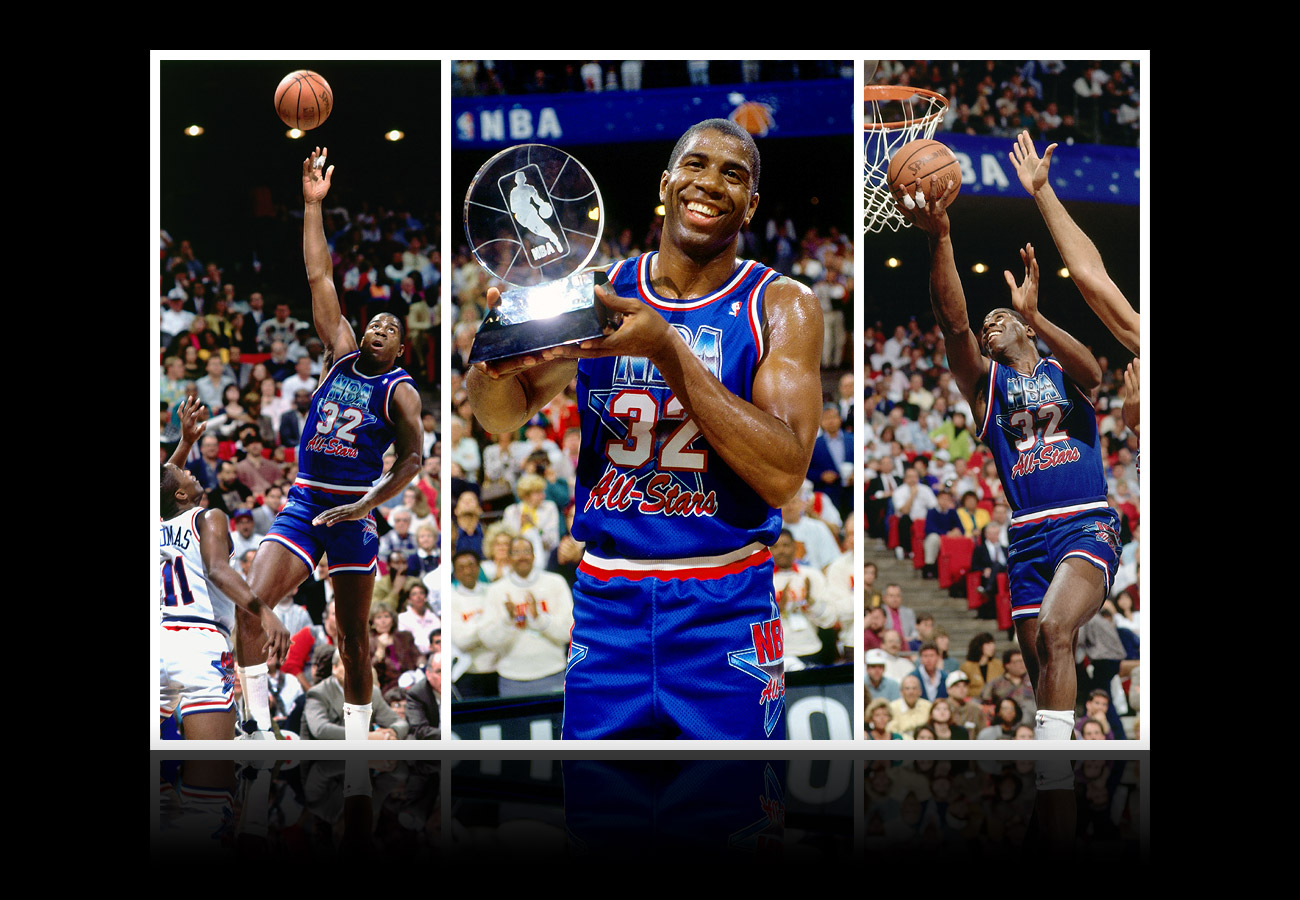
1992 NBA All-Star Game


So most of these posts are going to be about advertising, but I wanted to take a moment to talk about something that I found poetry in, that I found to be a riveting story.

When the 1992 All-Star game came about....back in 1992, I was only 4 years old. Needless to say that I really don't remember it from then. But with this year's All-Star game approaching, NBA TV has been playing back old all-star games.

First, you have to understand that I love NBA basketball. Most people love the college game, but how can you not appreciate the NBA? This is some of the world's best athletes and basketball players executing passes, shots, overall gameplay at the fastest pace and the highest level. I love seeing the differences in teams when it comes to style and team philosophy. On one hand, you have the San Antonio Spurs, led by Tim Duncan (the Big Fundamental), who play a defensive-minded, inside-outside halfcourt game. Then you have teams that are led by great point guards such as New Orleans (Chris Paul), Phoneix (Steve Nash), and the Jazz (Deron Williams).

But in 2010, the NBA is dominated by hybrids now. You've got players like LeBron James who can play either guard position and can post up and play either forward position. It's these hybrids that are now dominating the NBA offenses and style of play (see Amare Stoudemire, Gerald Wallace, Josh Smith, Dirk Nowitzki, Andrei Kirilenko, Antwawn Jamison, Kevin Durant)

So, needless to say, NBA TV is usually one of the first channels I turn to and is usually background noise when I'm doing other things. When I turned and saw the 1992 All-Star game I didn't really understand the context of the season, of culture, or could really guess who was on each team. I forgot that this was the beginning of the Dream Team years and the amazing talent that was playing at the time. This was, by far, the middle of the golden years of the NBA.

In the game, 13 out of the 50 greatest players of ALL TIME were on the floor. Here is the roster for each side to get an idea of the talent level at that game:

West:
Tim Hardaway
Clyde Drexler - Hall of Fame/Top 50
Hakeem Olajuwan - Hall of Fame/Top 50
David Robinson - Hall of Fame/Top 50
Magic Johnson - Hall of Fame/Top 50
Karl Malone - Hall of Fame/Top 50
John Stockton - Hall of Fame/Top 50
Chris Mullin
James Worthy - Hall of Fame/ Top 50
Dikembe Mutombo
Dan Majerle
Jeff Hornacek
Otis Thorpe

East
Isiah Thomas - Top 50/ Hall of Fame
Michael Jordan - Top 50/ Hall of Fame
Patrick Ewing - Top 50/Hall of Fame
Scottie Pippen - Top 50/ Hall of Fame
Dennis Rodman
Larry Bird - Top 50/ Hall of Fame
Charles Barkley - Top 50/Hall of Fame
Mark Price
Reggie Lewis
Brad Daugherty
Joe Dumars - Hall of Fame
Kevin Willis
Dominique Wilkins - Hall of Fame

So you get the idea. Some of the best players to ever play the game were all-stars that season. The story line was all about Magic Johnson, who had retired in November because of his contraction of HIV. The story shocked the world and brought people to tears. Magic was the most beloved player in the game. His personality, flair, style, and his ability to elevate his game made the Lakers the team that had the most fun and was the most fun to watch. You have to remember that this is the same guy who had done mythical things (won an NCAA title at Michigan State, won an NBA championship his rookie season by playing center-guard, winning NBA finals MVP, the only player to ever do that, and so on).

Magic could see passing lanes where others only saw bodies in the way. He started fast-breaks from a defensive rebound where the ball touched the ground maybe 3x. It's hard to describe the "magic" he had in words. To see him play was to make a sport into an art form. He was truly poetic with the basketball.

In steps David Stern, who creates a 13th All-Star position after the fans vote the now-retired Johnson into the game. Furthering the show of good faith, Tim Hardaway gives up his starting spot for Magic, adding to the allure that the game will bring.

Overall, watching the game was a lesson in the differences between today's NBA and the NBA of those years. These guys were all-stars and busting their ass on every play. Everyone was d-ing up and getting low in their stances. This was no game. This was competition and these guys took pride in going all-out against their best-in-class friends.

The game wasn't close. The West won 153-113. You see that score and think, "ya right, how were they playing defense?" The East was, but was no match up for the combination of Johnson and Company.

Often times, with the Western Conference team, Karl Malone or David Robinson would grab the rebound, pass to Magic, and haul ass down the floor. Magic meanwhile, always with his head looking for the right pass, was throwing passes overhand, underhand, lobs, behind-the-back, through-the-legs and all of the above at the same time. Everyone played their roles to perfection. Karl, David, Hakeem, and Dikembe played close to the basket, always ready to dunk away a finish. Havlicek, Mullin, Majerle, and Drexler took turns shooting threes, driving to the basket, and making split second decisions to touch pass the ball.

I counted over 20 times that the West scored without the ball touching the ground or anyone dribbling even once. The West worked as a team and the East was playing one-on-one basketball.

The game was so beautiful because you could see the pride in Magic's eyes. He knew that this would be his last time on that big of a stage and he wanted to seize the opportunity. The players around him were all his friends, guys like Isiah Thomas, Larry Bird, and Michael Jordan. They knew what this day meant to him. With the running game's coach as the West's coach, Don Nelson, Magic ran ran ran ran ran. The last two minutes was reserved for a few of the East's best to try and take on Magic. No one scored on him, not Jordan, not Isiah, no one. The highlight of his efforts was an inbounds pass that he took between the three-point line and half-court, with his back turned to his own basket, with a streaking Tim Hardaway running down the sideline. In less than a blink of an eye, he caught it and threw a perfect 25-foot behind the back laser pass (hitting Tim Hardaway in stride above the West's, or the opposite, three point line) that Tim Hardaway took the basket and finished. Oh, did I mention that he had to jump up to catch this pass, meaning he did all of this while he was still in the air.

Amazing.

In 29 minutes of play, he scored 25 points, threw 9 assists, and grabbed 7 rebounds, winning the All-Star MVP award. These are typical Magic numbers, if not less than what we expected of him. To see him play and lead these guys who were some of the best to ever play in his own style, one in which only James Worthy was used to, was amazing. You had guys like David Robinson, Clyde Drexler, and John Stockton running the floor full-speed when they played half-court ball with their respective teams. Showing the kind of respect to Magic that he deserved.

I wish I could describe the poetry of the game and of the moment better in words, but I can't, so I would definitely recommend checking out the highlights on YouTube and if you ever see the game being replayed then definitely taking the time watch it.

January 25, 2010

The 3 Vs of 2010

I know this is a little late, but I think 2010 is going to be a game-changing year. It's hope the year will be remembered by those in advertising as the year we really did have to start turning the ship towards something new in the industry.

Digital has been growing and growing for fifteen years, changing constantly. This is nothing new, we all know about the powers of digital technology and the Internet. What has changed the game is the economic downfall that everyone is going through. Sure, saying that people are spending differently isn't too original either. But it's more than that.

It's the fact that people are shopping differently, using digital technology more, and have grown skeptical of the business culture in general. That's the third factor.

As the Internet began to take off in the early 2000s, more and more corporate scandals, improper practices, and unethical decisions came to light in courts and in the media. People began to question what the point was to rely on these brands? They began to look for non-corporate ways to get what they needed. What sprouted was a move towards local, a move towards organic, a move towards social responsibility, a move towards simpler products and design, and a move away from big brands because of the organizations behind them.

What makes 2010 so unique are that these three things have come together and work hand-in-hand with each other. It's no longer enough for a company to have a strong social responsibility program, but aren't a part of social networks, or don't have a valuable product. All of this is fueled by innovation. In 2000, there was no Facebook. In 2005, we didn't have a Kindle and were just getting used to iPods. Now, in 2010, we have all of these and most importantly, smart phones.

The value of smart phones to the marketer is unparalleled. It's basically a small computer that is on an open network and provides tons of data about everything and anything. Before smart phones, there was no way to reach the consumers besides traditional advertising + online. Now, you can reach people individually through more than just advertising. You can reach them online, through applications, games, as well as more traditional channels.

Helge Tenne (sorry for no accent marks or O with slash through it) is a planner from Norway and he speaks about creating contextual value for consumers. Build your brand into the context of people's daily lives, not interrupting it, but aiding them in their daily routine. I believe in this idea wholeheartedly.

In my mind, these are the 3 Vs of Brands in 2010: Visibility, Values, Value.

Visibility
- Brands need to find new ways to be in front of the consumer, whether that's through creating a helpful application, building a unique, simple game or building customers through social networks. Brands need to adjust to the new utility-driven media devices and channels.

Values - Being "good" is a newly-created pillar of big organizations. It's no longer enough to have good customer service or a strong supply chain network to reduce costs and help people. Now, organizations have to make a dedicated effort, in money, organizational practices, and employees, to cut costs, reduce inefficiencies, build sustainability, and give something back to society as a whole.

Value - Value no longer means price. This is not a revolutionary idea. Value is really about adding something positive to the experience of using your product versus your competitors. This is nothing new either, but it's different now. User experience has moved to the front of line when it comes to product development priorities. Also value means building the service experience around your product. This is where most organizations (even those who don't build innovative products) can gain ground. Build value for your product by creating a universe of platforms and touch points that rotate around the product. This goes hand in hand with Visibility.

It's not just about visibility, but utilized visibility. Do something that creates value or entertainment or emotion. Don't just make a TV spot, make a 4-minute production you post on YouTube. Don't just create a website, create a website that is easy-to-use and offers content that feels more than just corporate rambles. Don't just create mobile coupons, create an application that is informational or useful in an unbiased manner. Give things away for free. It sounds crazy, but it brings value in the mind of the consumer.